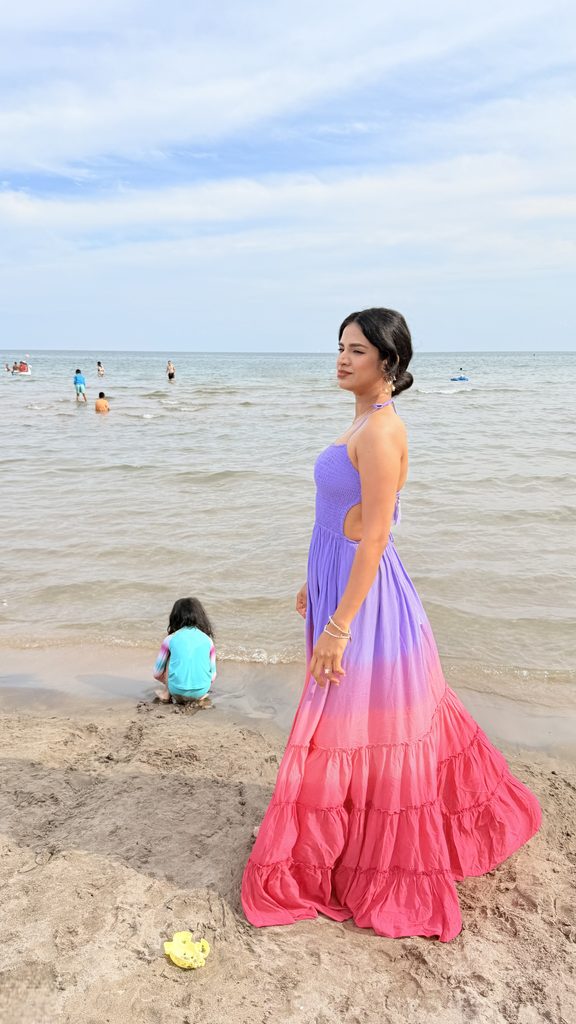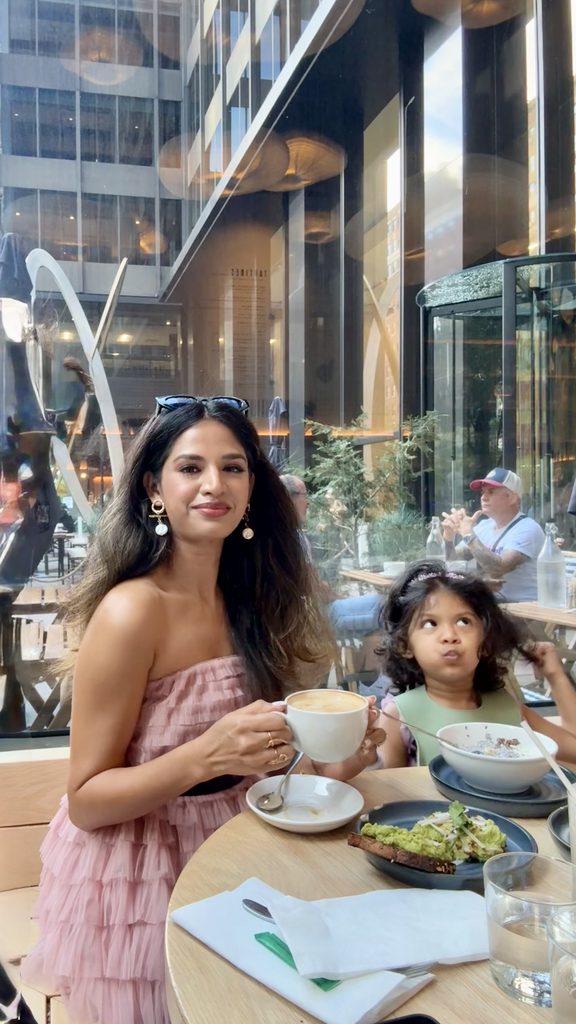


In an era where the curated perfection of motherhood floods our feeds, Aishwarya Borade is doing something radical: telling the truth. As the creative force behind @mom.in.a.million, a digital community of over 280,000 followers across social media, Aishwarya has built a platform that refuses to choose between aspiration and honesty. She blends aesthetic lifestyle inspiration with early-childhood STEAM education but beneath the polished content lies a deeper mission: creating space for mothers to feel seen, heard, and less alone.
In this conversation, Aishwarya speaks candidly about the postpartum experience, the part of motherhood we barely talk about, and the part she turned into her greatest creative breakthrough. From breastfeeding her daughter for nearly two years to navigating the impossible expectations placed on women to “bounce back” while workplaces expect them back at their desks, she names what so many mothers experience in silence and what she did to turn that season into something meaningful. Her perspective is shaped not only by her own journey but by the thousands of women across the U.S. and Canada who engage with her content daily, sharing their stories of resilience, creativity, and hope. This is more than an interview. It is a mirror for every mother who has ever wondered if she is enough and a reminder that the answer is always yes.

Pring and digital copies are available here.
BIOGRAPHY
Aishwarya Borade is a Canadian mom lifestyle creator and the woman behind @mom.in.a.million, a platform that has redefined what modern motherhood looks like online. With a bachelor’s degree in design and over 10 years working at a senior level in the design industry, Aishwarya brought a sharp creative eye to the world of content creation, turning a personal journey through motherhood into a brand that now reaches over 280,000 families across the United States, Canada, the UK, and India.
What sets Aishwarya apart is her refusal to separate the beautiful from the real. Her content exists at the intersection of aspirational lifestyle and unfiltered honesty, pairing aesthetic visual storytelling with early-childhood STEAM education and candid conversations about maternal mental health. The result is a community that doesn’t just follow; it trusts. Aishwarya built the foundation of @mom.in.a.million during her time in Virginia, USA, where she cultivated a deeply engaged, U.S.centric audience. She has led over 50 commercial partnerships with major North American brands, including Walmart, Himalaya USA, and Hatley.
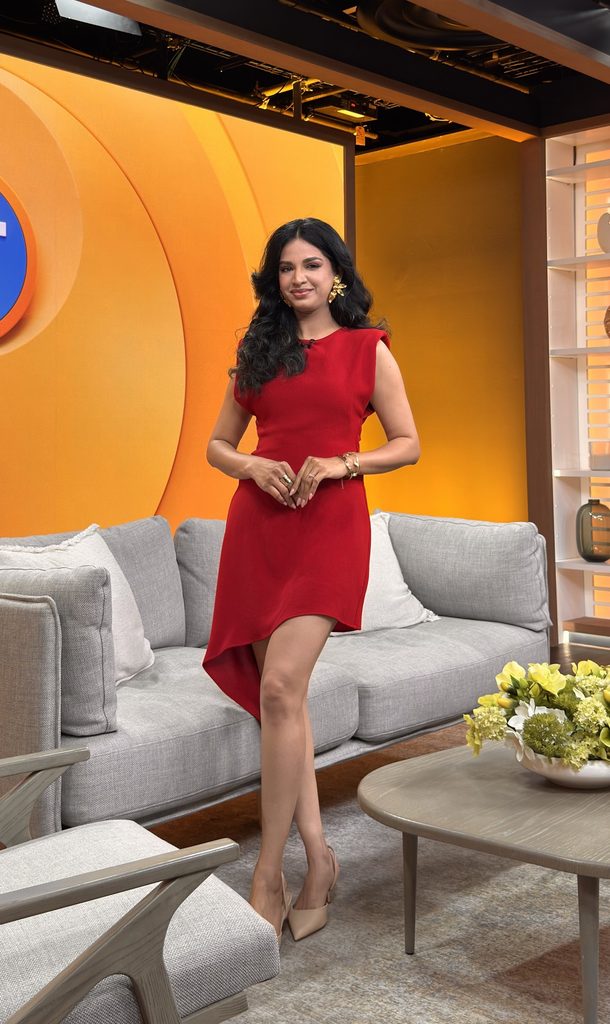
Her influence extends well beyond social media; she has appeared as a guest expert on national television, including Breakfast Television (Rogers Sports & Media) and The Morning Show (Global News), where she has brought conversations about modern parenting, maternal mental health, and early-childhood education to mainstream audiences.
Aishwarya, you’ve built one of the most engaged mom communities across North America. But before we get into the numbers, let’s start with the person behind the brand. What drew you to creating content around motherhood, and when did you realize this was bigger than a passion project?
Honestly, it started from a place of needing connection to myself. When I became a mother, I was struck by how isolating the experience could feel even while surrounded by people. I had this identity as a designer, as a creative professional, and suddenly I was navigating this enormous life shift without a roadmap. I started @mom.in.a.million because I wanted to see motherhood reflected the way I was actually experiencing it: beautiful and messy, aspirational and exhausting, often in the same breath. The moment I realized it was bigger was when women started messaging me saying, “I thought I was the only one feeling this way.” That’s when I understood that content creation, at its best, is community building. It’s not about broadcasting, it’s about holding space.
Let’s talk about postpartum specifically. You’ve been open about how transformative that phase was for you. Can you share what that experience was really like?
Postpartum was one of the most defining chapters of my life. I breastfed my daughter for almost two years, and during that time, I was navigating a completely new identity while my body and mind were going through changes I never could have anticipated. Nobody really prepares you for what happens to a woman after birth, the focus is all on the baby, and rightly so, but the mother is also becoming someone new. And instead of waiting for that season to pass, I decided to use it.
I started creating content that reflected exactly what I was living. I documented the beautiful moments and the hard ones. I turned my design background into a creative outlet that helped me process everything I was feeling. I built a community of women who were going through the same things, and suddenly that isolation I’d felt at the beginning, it started to lift. That’s the thing about postpartum: it’s a season of enormous change, but it’s also a season of enormous growth. It pushed me to build something that mattered, not just to me, but to thousands of other women who needed to see their experience reflected. I wouldn’t trade that chapter for anything, because it gave me @mom.in.a.million.
There’s this impossible tension where society expects women to “bounce back” physically and emotionally, while employers expect them back at work almost immediately. How do you see that playing out?
This is one of the most damaging double standards we have. On one side, society and social media tell you to “bounce back”, lose the baby weight, get your pre-baby body back, look like you didn’t just create and sustain a human life. On the other hand, the workplace expects you back at your desk as if nothing happened. A woman’s body goes through one of the most intense physical events a human can experience, and she’s expected to perform as though she’s the same person who was there before. She’s not. She’s different, physically, emotionally, and hormonally. And that’s not a weakness; it’s just reality. We need workplaces that acknowledge what postpartum actually means. We need policies that don’t treat a six-week checkup as a finish line. And we need to stop pretending that “bouncing back” is a goal. The goal shouldn’t be going back to who you were. The goal should be supporting who you’ve become.
When your maternity leave ended, what was that transition back to work like for you?
It was one of the hardest things I’ve ever had to do. My daughter was a year old (thanks to Canada’s generous 12-month paid parental leave policy), and I had to walk away from her and go back to work. The thought of not being there for her, of missing her milestones, her first steps, and all those little everyday moments that you can never get back, was incredibly difficult. And I know I’m not alone in this. So many mothers go through that same separation, while others don’t even get more than six weeks of maternity leave. Not because they want to go back, but because they don’t have a choice. Financially, professionally, practically, there’s no other option. You go back. And no one talks about the emotional cost of that. We talk about the logistics: childcare, scheduling, pumping at work.
But we don’t talk about the guilt, the heartbreak of dropping your child off and driving away. Mothers carry that weight every single day, and it’s a mental health burden that deserves to be acknowledged. But here’s what I’d say: it’s also what pushed me to build something of my own. That season of heartbreak is part of what made @mom.in.a.million necessary not just for me, but for every mom who needed to know she wasn’t the only one feeling that pull.
Your content blends lifestyle with early-childhood STEAM education. How does that educational component connect to mental health both for parents and children?
They’re deeply connected. When parents feel equipped, when they have tools, activities, and a sense of agency in their child’s development, their anxiety decreases. A lot of parental mental health struggles from feeling like you’re not doing enough, or not doing it right. STEAM-based activities give parents a framework. It’s not about flashcards and pressure; it’s about meaningful engagement. When a mom sits down with her toddler to build something, explore a texture, or ask “what do you think will happen?” that’s not just education. That’s the connection. And connection is the antidote to so much of the anxiety we see in modern parenting. The child benefits cognitively, and the parent benefits emotionally. It’s a two-way street.
Cultural expectations around motherhood can be a significant mental health pressure, especially for mothers navigating multiple cultural identities. How has your own cultural background shaped your experience?
This is such an important point. As a mother with roots in India, living in North America, I’ve navigated the expectations of multiple cultures simultaneously. In South Asian culture, motherhood is deeply revered, but that reverence comes with intense expectations of sacrifice, of selflessness, of putting yourself last. In North American culture, there’s this added pressure to “do it all”: the career, the parenting, the self-care, the side hustle. When you’re standing at the intersection of those two narratives, the mental load doubles. You’re not just managing a household; you’re managing cultural expectations. I think the breaking point for a lot of mothers, especially immigrant and cross-cultural mothers is when they realize they can’t be everything to everyone. And that realization, while painful, is also liberating. You get to choose which traditions you carry forward and which you gently set down. You get to define your own version of a good mother.
For the mothers reading this who might be in a hard season right now, what would you say to them?
I would say: You are not behind. There is no timeline you’re failing to meet. The version of motherhood you see online is a highlight reel, and your behind-the-scenes is not a flaw, it’s the real thing. And if you’re in a hard season, know that it doesn’t define your whole story. Some of the most beautiful things I’ve built came from the hardest moments. Ask for help, even if you don’t know exactly what help looks like. You don’t have to earn rest. You don’t have to justify needing support. And please know that the fact that you’re worrying about whether you’re a good mother is, in itself, evidence that you are one. You care. You’re doing more than enough. You are a Mom in a Million not because you’re perfect, but because you’re showing up.
What’s next for @mom.in.a.million, and how do you hope this conversation contributes to the broader mental health dialogue?
Soon I’ll be launching STEAM activity guides for parents, practical, accessible, and designed to make meaningful engagement with your child feel doable, not overwhelming. I’m also developing a series of resources specifically designed for the mom who doesn’t have time for a 500-page book but needs real tools. My hope for this conversation is simple: that it reaches the mother who needed to read it today. That it makes one woman feel less alone. Because that’s how change starts, one woman, one truth, one “me too” at a time. I want @mom.in.a.million to be more than a brand. I want it to be a movement that says: mothers deserve care, not just praise. We deserve support, not just celebration. And our mental health is not an afterthought; it’s the foundation everything else is built on.